Critical Component List (CCL) in Medical Device Manufacturing
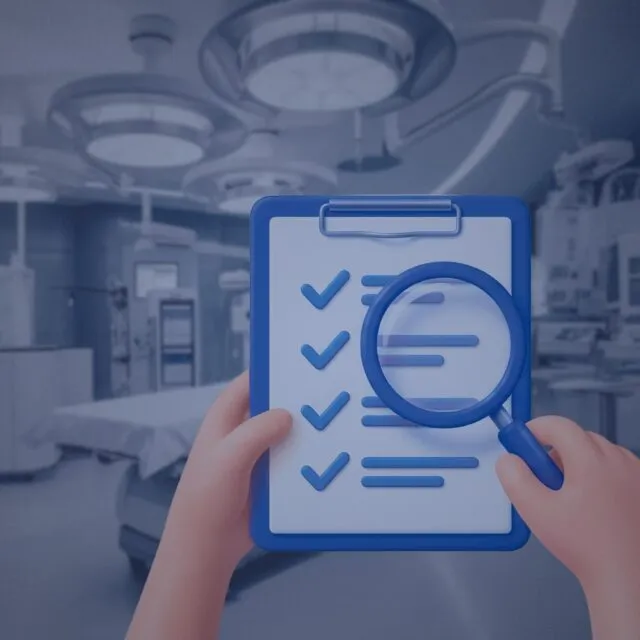
In the development of medical devices, the control of safety-critical components plays a central role. A Critical Component List (CCL) is not just a “nice to have”, but an essential tool for:
Nevertheless, in many projects the CCL is either created too late, maintained incompletely, or not systematically linked to risk management.
The CCL is not explicitly required as a term in standards or regulations, but it is indirectly derived from several requirements:
ISO 14971 (ISO/TR 24971 Annex A):
IEC 60601-1: Requirements for safety-relevant components
IEC 60601-1: Implementation of “Means of Protection” (MOP, MOOP, MOPP)
EU MDR – Article 23 clearly states:
Especially for safety-critical components (e.g. isolation barriers, power supplies, sensors, protective circuits), clear identification within the CCL is essential.
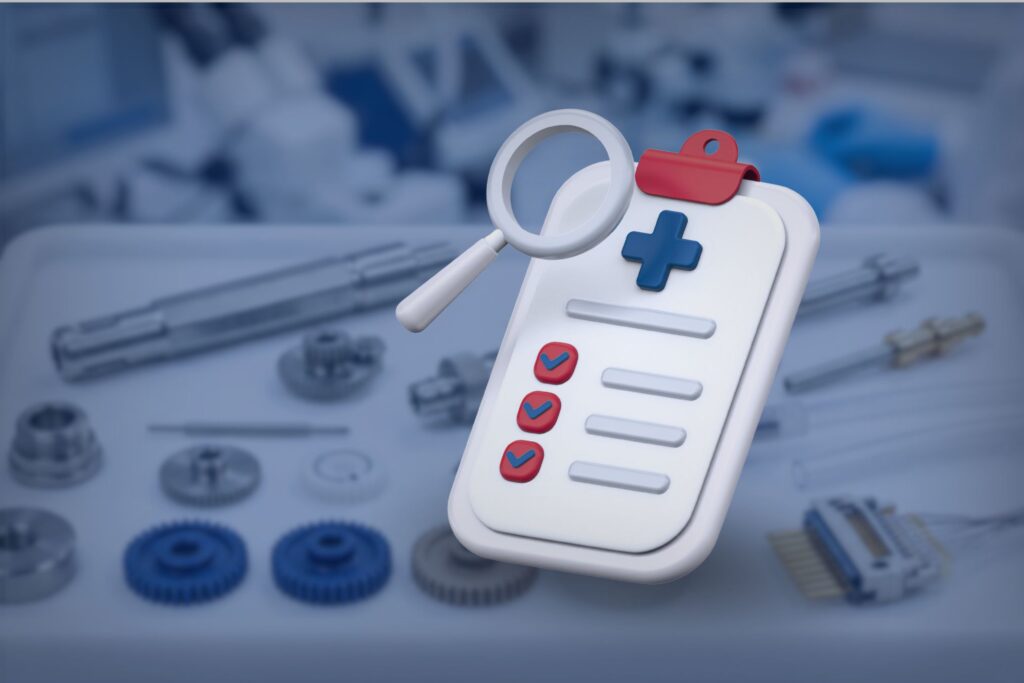
A Critical Component is any component whose failure or malfunction:
Typical examples include:
The objective is not simply to create a random list of components. Certified components should be purchased or tested according to the applicable standard requirements.
To ensure that a component is not considered critical from a risk and especially systematic component failure perspective, the manufacturer must ensure that:
Additional considerations may include:
The CCL fulfills several functions simultaneously:
Transparency
Which components are safety-critical – and why?
Traceability
Linkage to:
– Hazard Analysis
– FMEA / DFMEA
– Safety Requirements
Supply Chain Control
– Supplier approval
– Second source evaluation
– Incoming inspections & audits
Verification & Validation
– Which components require special testing?
– Which components must be certified?

Dijaz Maric, Quality & Safety Consultant
Need support with Critical Component Lists, IEC 60601, or medical device risk management? Our team supports manufacturers with functional safety, compliance strategy, and audit preparation.
Contact us for bespoke consultancy or join one of our upcoming online courses.
Learn moreIEC 61010-1 follows a protection-principle-based approach. The objective is not only functionality, but also protection against hazards such as:
And this is exactly where the CCL becomes important again: all components implementing a protective function are, by definition, “critical”.
Examples include:
We must be able to demonstrate:
And this is exactly what the CCL supports.
Typical Example: Power Supply of a Laboratory Device
Hazard:
– Electric shock
Requirement according to IEC 61010:
– Double or reinforced insulation
Design implementation:
– Transformer with reinforced insulation
– Optocoupler in the feedback path
Typically, the inputs are first collected based on:
– System architecture / block diagrams
– Risk analyses such as DFMEA
Risk/Criticality is then evaluated based on questions such as:
– Does failure lead to a hazard?
– Is redundancy available?
– Is the component part of a protective measure?
Afterwards, the safety criticality of the component is assessed.
Every critical component should be traceable to:
Example:
– Hazard: Electric shock
– Control: Isolation barrier
– Component: Optocoupler
→ MUST be included in the CCL
The Critical Component List is a key element for:
The CCL is linked to the current version of the product. However, this does not mean that the CCL cannot be modified. Most Notified Bodies do not require complete re-certification for every change, but such modifications must still be properly planned and implemented (impact analysis, required testing and verification, etc.).
However, companies that actively use the CCL throughout the development process not only reduce risks, but also significantly reduce future audit findings.
By Dijaz Maric, Quality Management & Reliability Engineering Consultant
Looking to strengthen your team’s understanding of IEC 60601, ISO 14971, or safety-critical component management? Explore our training and consultancy services for medical device manufacturers.
Address Austria:
Lorit Consultancy GmbH
Siezenheimer Straße 35
5020 Salzburg / Austria
Address UK:
Lorit Consultancy Ltd
1 Craigathie Road
Roslin Midlothian / Scotland EH25 9BG